
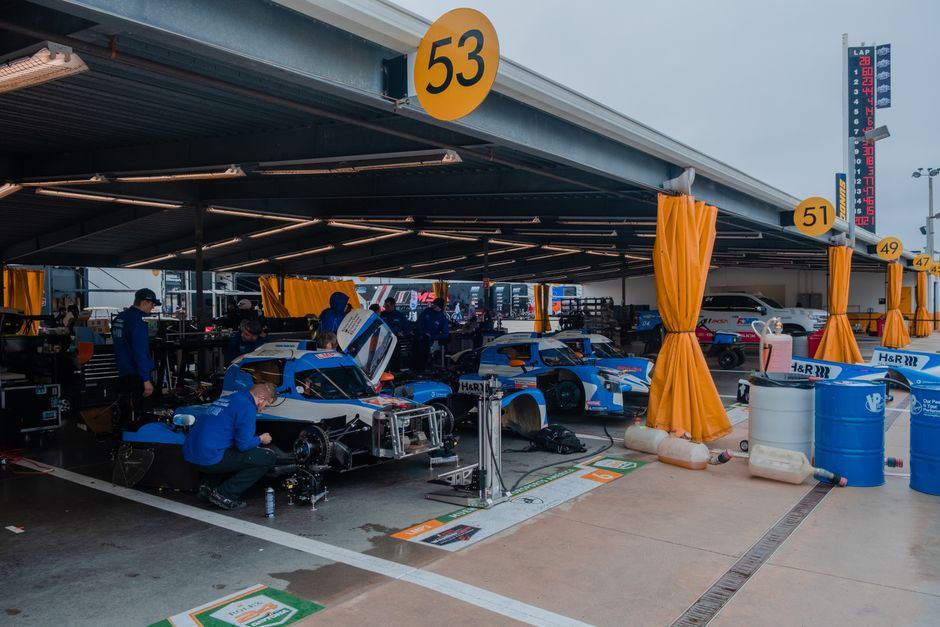
During my eight seasons on a pit wall, I spent my life obsessed with data density. We tracked tire degradation, fuel burn, and brake temperatures with obsessive precision. If our telemetry indicated a 15% increase in tire wear rate over three laps, I could predict the exact moment our car would fall off the pace. We dealt in variables that had causal relationships. The car didn’t just “decide” to lose grip; it happened because of friction, heat, and structural fatigue.
Then, I moved into analyzing gaming algorithms, and I realized that many players approach slot machines with the same mindset I used on the pit wall. They look for patterns, they look for “hot” streaks, and they mistake Return to Player (RTP) percentages for a reliable roadmap. Let me be clear: this is a fundamental category error. Predicting a slot spin is not an engineering problem—it is an exercise in futility.
The RTP Fallacy: A Mathematical Misunderstanding
When you see a platform like MrQ list an RTP of 96% for a slot game, players often view this as a guarantee of sorts. They assume that if they wager £100, they will get £96 back. This is a complete misunderstanding of how probability works in a static, non-causal environment.
RTP is an aggregate figure calculated over millions, sometimes billions, of spins. It is a long-term mathematical expectation, not a short-term trajectory. To understand why this fails in practice, we have to look at the law of large numbers.
Let’s run a quick back-of-the-envelope calculation. If a slot game has a 96% RTP and we run 1,000,000 spins, the variance is mathematically smoothed out. However, if you are sitting at a machine for 100 spins, you are existing entirely within the realm of variance. In my racing days, a pit stop strategy wasn’t “instinct”—it was a calculated response to track conditions. In a slot machine, the “track conditions” reset completely every single millisecond. The machine has no memory of the previous spin.
The Variance Table
As you can see, the deviation from the mean in a low-sample-size environment is massive. Relying on RTP to predict your session outcome is like expecting the average speed of a 24-hour race to tell you exactly how fast a car will be in a single corner. It simply doesn’t scale down.
RNG Independence and the “Memory” Myth
The core of the problem is Random Number Generation (RNG). Unlike a race car, where the state of the vehicle at T+1 is directly dependent on the state at T, a slot machine spin at T+1 is entirely independent of the spin at T.
There is no “due” payout. If a machine hasn’t hit a bonus in 500 spins, the probability of it hitting on the 501st spin is identical to the probability of it hitting on the first. This is a point of contention for many, but the literature in Applied Sciences (MDPI) consistently highlights the structural independence of these algorithms. They are designed to prevent patterns, not to accumulate them.

I often see people describe the “tightening” or “loosening” of a machine. In racing, we talk about “tight” or “loose” car setups based on telemetry. That is a physical state we can measure and adjust. In a slot machine, those words are purely metaphorical. They describe a psychological state of the player, not a mechanical state of the software.
The Monte Carlo Principle
When we wanted to model race outcomes, we used Monte Carlo simulations. We would run 10,000 virtual races to see how fuel strategy or weather changes impacted our chances of a podium. In that context, the simulation helps us understand the probability distribution of different outcomes.
When you apply the Monte Carlo principle to slots, you aren’t finding a way to win—you are actually proving how unpredictable the game is. If you run 10,000 simulations of 100 spins, you will see a massive spread of outcomes, ranging from total bankruptcy to massive windfalls. The simulation doesn’t provide a “strategy.” It provides a map of the chaos. If someone tries to sell you a “strategy” based on these simulations, they are overstating the certainty of a probabilistic system.
Telemetry vs. Data Density
In motorsport, telemetry is our primary tool for decision-making. We monitor everything from tire pressure to steering angle. We have massive data density. We know the car is failing because we can see the temperature spikes in the brake discs.
When players look at a slot machine’s history, they are looking at “data,” but they are missing the density required for it to be actionable. A slot machine history is just a record of past randomness. It is not telemetry. It is not an indicator of machine health or impending cycles.
As noted in the MIT Technology Review regarding algorithmic transparency, these systems are specifically engineered to be unpredictable. Attempting to derive a “winning strategy” from a list of past spin results is the statistical equivalent of trying to predict the weather next month by looking at the color of your socks today. The two data sets simply have no causal link.
Why Strategy Cannot Be “Instinct”
I take significant issue with the idea that gambling strategy is an “instinct.” In the pits, we had a mantra: “If you can’t measure it, you can’t manage it.” Strategy is the application of logic to measurable variables.
- Racing Strategy: Informed by tire wear, fuel load, track temperature, and traffic.
- Slot “Strategy”: Informed by… the player’s gut feeling?
If you aren’t using measurable, causal variables, you aren’t using strategy. You are engaged in a game of chance. That is fine, provided you acknowledge it. The danger arises when players begin to believe they have cracked a code that simply doesn’t exist. This is where the misunderstanding of randomness turns from a hobby into a systemic failure of logic.
The Limits of Comparison
It is important to be intellectually honest here: my comparison between racing and slot machines is partial at best. In racing, we have infinite complexity, but those complexities are governed by the laws of physics. In slots, we have a closed system governed by the laws of software and probability.
A racing team can use data to change an outcome because the variables—like downforce or gear ratios—are adjustable. You cannot “adjust” a slot machine. There is no pit crew for a digital reel. The simulation of “control” is perhaps the most effective trick in the book.
Conclusion: Embrace the Chaos
After years of staring at monitors, I have learned that the most dangerous thing you can do with data is project your desire for order onto it. We want the world to be predictable. We want to believe that if we just analyze enough spins racingsportscars.com or look at enough history, we can gain an edge.
But the math is cold. The RTP is a long-term average, the RNG is independent, and the Monte Carlo simulations only reinforce the fact that any individual session is dominated by noise. When you sit down at a machine, you aren’t fighting an opponent; you are interacting with a process designed to be perfectly, immutable random.
My advice? Treat it as entertainment, not an engineering challenge. The moment you think you’ve spotted a “trend” in a slot machine, you’ve stopped being a data analyst and started being a victim of your own cognitive bias. Keep your data analysis for the track, where it actually matters.